Beihai Park
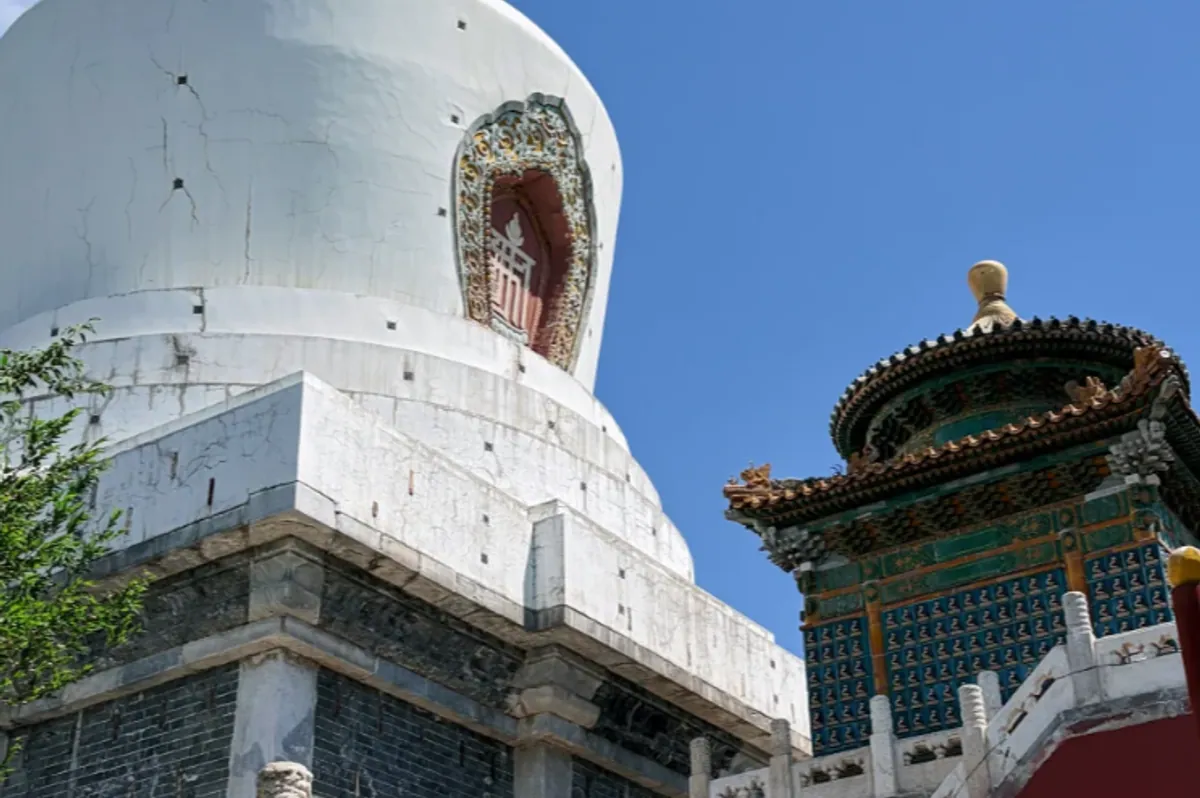
Beijing’s largest and best-preserved classical imperial garden, centered on a man-made lake and the iconic White Dagoba pagoda perched on Jade Mountain. A UNESCO World Heritage-listed extension of the Summer Palace, beloved by morning tai chi practitioners and boat-rowers alike.
Why It’s Worth Visiting
Beihai Park is the oldest, most complete imperial garden in Beijing — the White Dagoba perched on Jade Mountain above the lake is one of the city's most photographed and beloved silhouettes, and the park's lakeside calm is a genuine antidote to the palace crowds nearby.
It is also gloriously versatile: a two-hour scenic loop, a rowboat on the lake in summer, a skating rink in winter, and a front-row seat to Beijingers' daily life — fishing, kite-flying, tai chi. Few sites reward an unhurried visit so well, and it chains perfectly with Jingshan and the Drum Towers for a full old-city day.
What to Expect
Beihai Park is Beijing's oldest and most complete imperial garden, and its centerpiece — the white Tibetan-style dagoba perched on Jade Mountain above the lake — is one of the city's most photographed silhouettes. The park works on two scales at once: a grand imperial composition of lake, hill, and pagoda, and an intimate neighborhood green space full of daily life.
The lake dominates. In summer, pedal boats and dragon boats crisscross the water while locals fish from the willow-shaded banks; in winter the frozen lake becomes one of Beijing's great outdoor skating rinks. The Five-Dragon Pavilions, five connected pavilions jutting into the water on the north shore, are the classic viewing spot for the dagoba reflected across the lake.
The north gate entrance leads to the causeway crossing to Jade Mountain — climb the 17 winding steps to the White Dagoba's base for the elevated view over the entire lake and, beyond it, the drum towers of the old city. The park rewards slow loops: the full perimeter walk takes two hours with a rowboat break thrown in.
The dagoba has a storied past. Built in 1356 as a Tibetan-style pagoda, it was destroyed by lightning and rebuilt repeatedly — the current structure dates to the Qing Dynasty, and its niche housed a Buddhist relic until the 1960s. The surrounding hill, an artificial mound of earth and rock, carries the same feng shui logic as Jingshan, screening the imperial residence from cold northern winds.
Beihai slots neatly into a day of central-Beijing sightseeing: it sits a short walk from both Jingshan Park and the Drum and Bell Towers, and its lakeside atmosphere makes it the most relaxing of the imperial sites — part garden, part public square, entirely worth two unhurried hours.
From the southern shore of Front Lake, with the White Dagoba framed by willow branches against the water around 5pm. Mist over the lake in autumn makes it look like a Chinese scroll painting.
| Ticket Price | CNY 10 – CNY 15 |
| Duration | 2-3 hours |
| Nearest Subway | Beihai North (Line 6), Exit B |
| Best Season | Spring, Autumn |
| Best For | All visitors, including families |
Must-See Highlights
- White Dagoba on Jade Mountain
- Beihai Lake boat rentals
- Five-Dragon Pavilions
- Morning tai chi on the causeway
- Lotus blossoms in summer
How to Get There
Take Line 6 to Beihai North station (Exit B). The attraction entrance is a short walk from the station.
Beijing subway operates from approximately 5am to 11pm daily. Fares range from CNY 3 to 9. English signage and announcements are available on all lines.
How to Spend Your Time
- 1
Enter at Beihai North (Line 6, Exit B) for the shortest walk to the lakeshore.
- 2
Cross the causeway to Jade Mountain and climb to the White Dagoba.
- 3
Walk the north shore to the Five-Dragon Pavilions for the classic dagoba reflection shot.
- 4
End with a 30-minute rowboat rental before the late-afternoon light fades.
Insider\u2019s Tip
Walk the entire perimeter of Beihai Lake clockwise from the north gate — you’ll find locals fishing and flying kites where tour groups never go. Rent a rowboat (CNY 30 for 30 min) from the lakeside kiosk, but haggle politely; 40 yuan is the walk-away price.
A Bit of History
Built in 1215 during the Jin Dynasty and expanded by the Ming and Qing, Beihai was an imperial retreat for emperors who wanted a quieter alternative to the Forbidden City’s formality. The White Dagoba, modeled on the Tibetan Potala, was built for the Yongzheng Emperor in 1356 and survived the 1976 earthquake.
Beat the Crowds
Mornings (8–10am) are for locals: tai chi, calligraphy on the pavement, and cicada-snatching kids. Weekday afternoons after 2pm are quiet; weekends get busy near the lake boats. Golden Week and Chinese New Year are the busiest.
Where to Eat Nearby
Exit north into Houhai's hutong maze — Qianyuan Guandong restaurant (No. 19 Yindingbao Lane) does excellent braised pork with preserved vegetable. For a sweet finish, walk 5 minutes to Tianjin-style fried dumplings at South Street Snacks.
Best Photo Spot
From the southern shore of Front Lake, with the White Dagoba framed by willow branches against the water around 5pm. Mist over the lake in autumn makes it look like a Chinese scroll painting.
Good to Know
- Entry is CNY 10; the dagoba interior adds a small surcharge.
- Beihai connects to Jingshan and the Forbidden City by short walks — chain all three in one day.
- Mornings are for locals (tai chi, kite-flying); weekday afternoons are the quietest for tourists.
- Winter skating on the lake is a Beijing institution — check the ice depth notices first.
- The south gate exits near the Forbidden City's north area and the Shichahai lake district.
Beihai Park: Frequently Asked Questions
How much time should I allow for Beihai Park?
Two hours covers the dagoba climb, the Five-Dragon Pavilions, and a lake loop. Adding a rowboat or the winter skating rink extends it by 30-60 minutes.
Is Beihai Park free or ticketed?
Ticketed — CNY 10 in peak season. The White Dagoba interior carries a small separate surcharge. Entry is free on a handful of state holidays.
What is the White Dagoba?
A Tibetan-style white pagoda built in 1356 atop Jade Mountain. It is the park's defining landmark and offers the best elevated view over Beihai Lake and the old city from its base.
Can I combine Beihai with other sights?
Yes — it chains naturally with Jingshan Park (10-minute walk), the Drum and Bell Towers (15 minutes), and the Forbidden City (25 minutes). They form one of the best walking loops in central Beijing.